


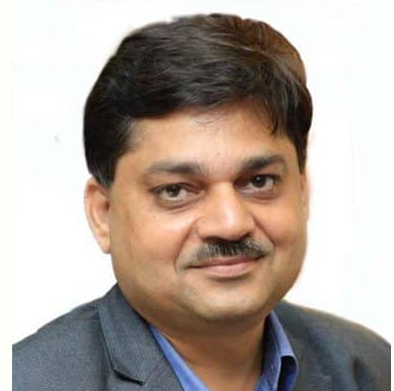
Professor Praveen Vashist is providing technical support to the National Programme for Control of Blindness in India and has been involved in planning, implementation, and monitoring in all major surveys under NPCB over the last 23 years, including the National Blindness & Visual Impairment Survey, National Diabetic Retinopathy Surveys, National Trachoma Prevalence Surveys, National TT Only Surveys, National Corneal Opacity Survey, and National Human Resource and Infrastructure Surveys. He is a member of many National Task Forces and Committees under NPCB&VI, India, and is well known for working toward Trachoma Elimination in India. He has been involved as an expert with the WHO and manages the WHO Collaborative Centre for Prevention of Blindness at AIIMS New Delhi. Currently, he is implementing AIOS_ Project SEE- National survey on eREC among Children and the National survey on Rapid Assessment of eREC and Presbyopia in India. Additionally, he has more than 150 publications in peer-reviewed journals, books, and chapters, and has received many awards, including the Best Researchers award in AIIMS, New Delhi and the AIOS- KR Dutta Award for best Community Ophthalmology services.
His research and public-health work spans refractive error, primary eye care, school eye health, low-vision rehabilitation and community-based eye-care delivery. He has worked with government agencies, WHO, ICMR and leading international and Indian eye-health organisations, bringing rigorous epidemiological evidence into discussions about how eye care should be planned and delivered.
With more than 80 publications in peer-reviewed journals and extensive experience in research, teaching and public health programs, Dr. Vashist has become an important voice in India’s efforts to understand and address avoidable vision impairment.
His work is particularly relevant to the challenge of uncorrected refractive error and presbyopia: conditions that may be relatively simple to correct for an individual, but represent a significant public-health challenge when millions of people lack access to screening and appropriate correction.
