


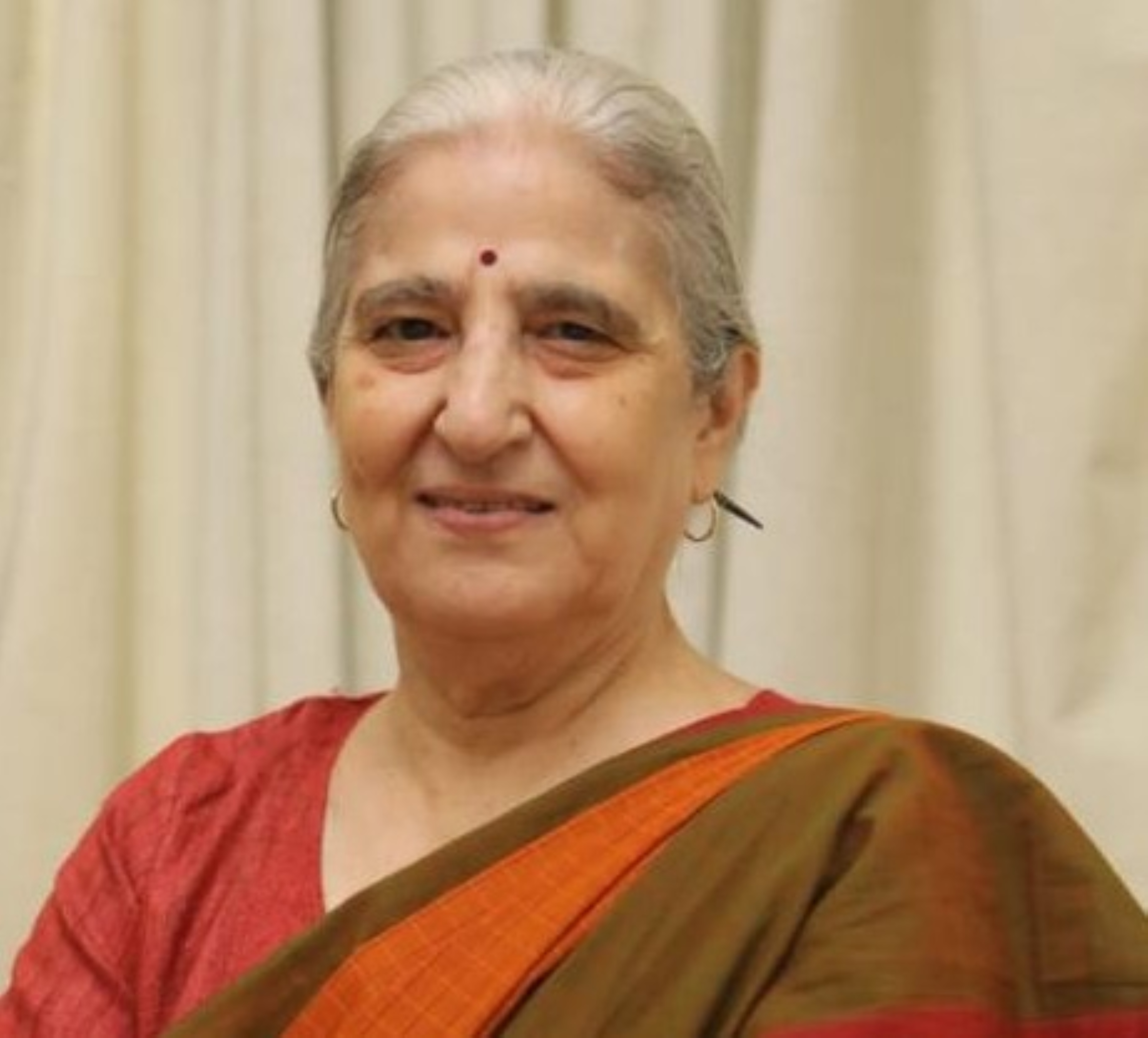
Renana Jhabvala has been associated with the Self Employed Women’s Association (SEWA) since 1978 in a number of roles within the SEWA movement, with a particular focus on overseeing the movement’s expansion and diversification. She is the co-founder of many organisations within the SEWA movement and the movement of informal workers. In particular she is a founder of Mahila Housing SEWA Trust, a socio-technical organization which prioritizes participation of poor women in improving urban spaces and focuses on challenges of urban climate change; as well as SEWA Grih Rin Limited (Now Sitaara Housing Finance Ltd), which prioritizes housing loans to informal working families. At the international level she is a co-founder of HomeNet South Asia, and WIEGO (Women in Informal Employment Globalizing and organizing), a research, action, policy network. In 1990, she was awarded the Padma Shri from the Government of India for her contributions to the field of social work. She was a Member of the UN Secretary General’s High Level Panel on Women’s Economic Empowerment (2016-2017) and Chancellor of Gandhigram Rural University (2012-2017). As a thought leader in the space of women’s work, she has made critical contributions to an understanding of informality, measuring women’s work and issues of housing and urban planning.
She is a prolific author - some of her publications include The City-Makers: How Women are Building a Sustainable Future for Urban India, co-authored by Bijal Brahmbhatt, Hachette India (2020); Basic Income: A Transformative Policy for India, co-authored by Sarath Davala, Soumya Kapoor Mehta & Guy Standing, Bloomsbury Publication (2014) and The Idea of Work, which she co-authored with Elaben R. Bhatt, Indian Academy of Self Employed Women (2012).
